The Living Páramo: The Fire Problem
In the High Andes, the ecosystem is built on balance. We have explored the frailejón forests, the hidden wetlands, and the living soil—each a testament to the resilience of this unique tropical alpine environment. But even a resilient system has its breaking point.
Welcome to Part 9 of our Living Páramo series. Today, we confront one of the most significant threats to the high country: the fire problem.
A Disturbance in the Balance
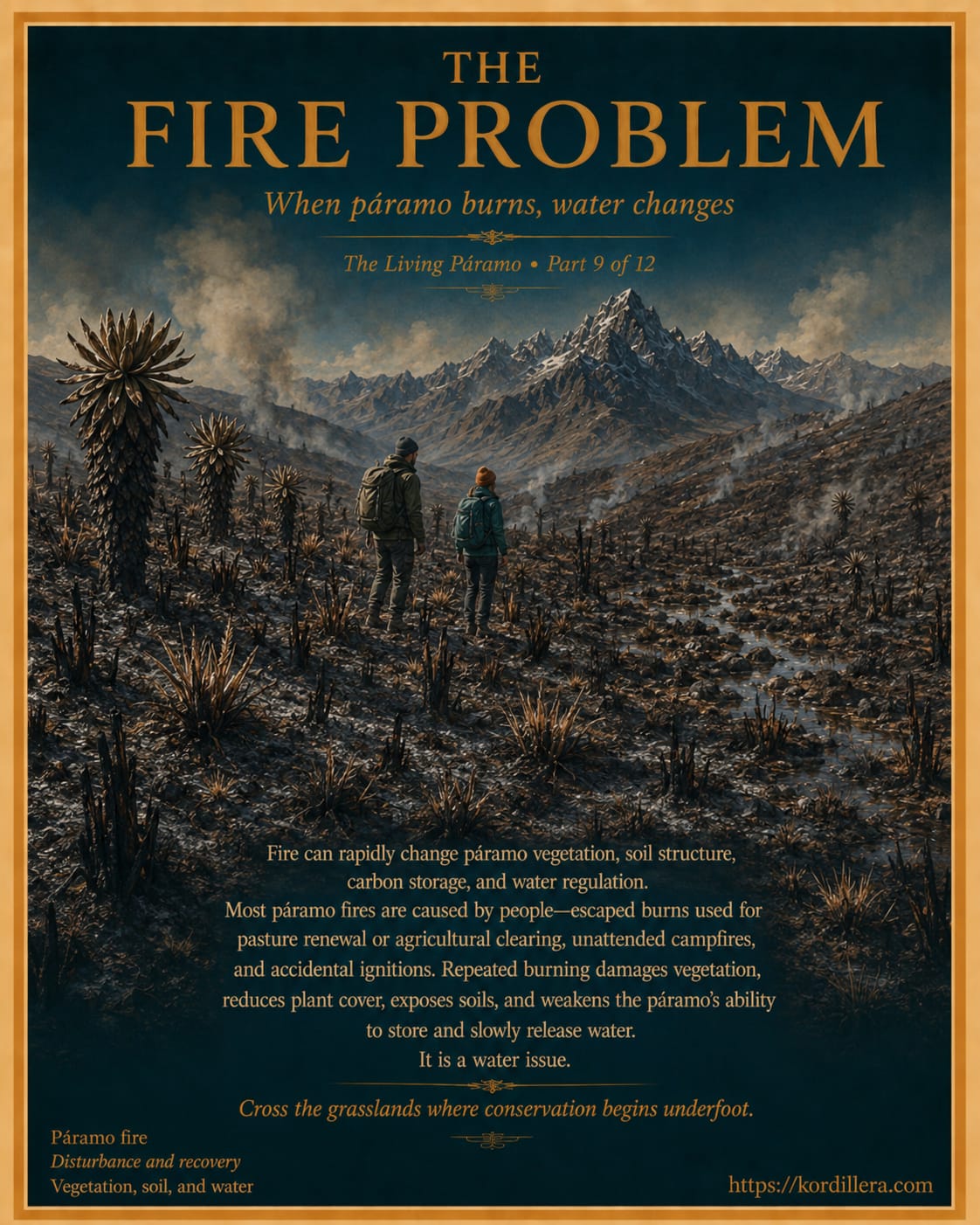
Fire is one of the major disturbances affecting páramo ecosystems, and its impact goes far beyond the blackened grass we see in the aftermath. Burning is not just a surface-level event; it is a fundamental disruption of the entire ecosystem.
When fire sweeps through the páramo, the effects are profound:
- Soil Degradation: Intense heat alters the structure of the soil itself, stripping away the complex organic matter we explored in our previous posts.
- Habitat Loss: It destroys the protective plant cover that supports local biodiversity.
- Hydrological Shift: By exposing the ground and destroying the mosses and grasses, fire weakens the páramo’s ability to act as a sponge. It alters runoff patterns and compromises the land’s capacity to store and release water gradually.
The Human Connection
Many páramo fires are not natural occurrences; they are human-caused. They often stem from escaped burns used for pasture renewal or agricultural clearing, unattended campfires, or accidental ignitions that spiral out of control during dry, windy conditions.
The ecological consequence of these fires depends on a complex interplay of variables—frequency, intensity, vegetation type, and moisture. But one thing is certain: when the cycle of fire exceeds the cycle of recovery, the landscape changes irreversibly.
The Water-Regulating System
Why does this matter so deeply? Because the páramo is not just a pretty collection of plants—it is a vital water-regulating system.
When we burn the páramo, we are not just damaging a grassland; we are damaging the very infrastructure that captures rain, fog, and snowmelt. The same soils, mosses, and wetlands that feed the rivers, towns, and cities downstream are the ones most vulnerable to fire.
For the Trekker: Conservation Underfoot
For those of us moving through this landscape, the lesson is direct and personal. Conservation in the páramo begins with how we move through it.
It starts with our choices: where we camp, how we manage fire (or, ideally, avoiding it altogether), and whether we truly understand the fragility of the ground beneath our boots. Every action we take is a statement about our commitment to preserving the water-storage system that supports life in the Andes.
As you trek through these high grasslands, remember that you are walking through a living reservoir. Treat the ground with the caution it requires.
Cross the grasslands where conservation begins underfoot.
#FireProblem #ParamoFire #PáramoFire #Paramo #Páramo #LivingParamo #HighAndes #Andes #Wildfire #FireEcology #Conservation #DisturbanceEcology #MountainHydrology #WaterStorage #SoilEcology #CarbonStorage #HighAndeanGrasslands #TropicalAlpine #PáramoEcology #MountainEcology #Biodiversity #Ecology #NaturalHistory #ScienceCommunication #OutdoorEducation #ExpeditionTravel #NatureTravel #AndeanNature #KordilleraKnowledgeBase #ExploreTheAndes #WildAndes #Kordillera