
Kordillera #Cordillera #FeetFinishExpeditions
THE WET FOOT
Part 7 of 10 in Feet Finish Expeditions.
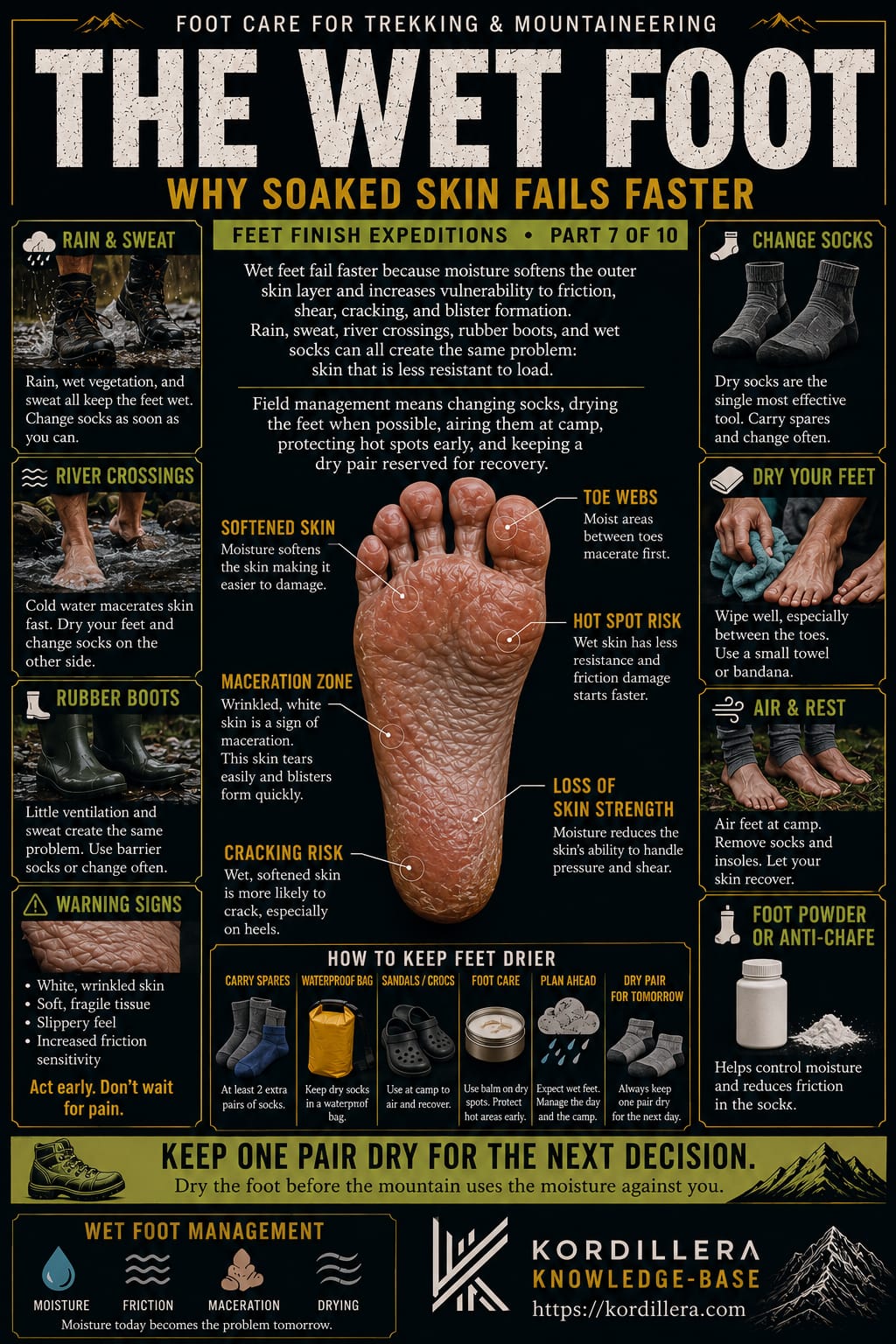
Wet feet fail faster because moisture softens the outer layer of the skin. Once the skin is softened, it becomes more vulnerable to friction, shear, cracking, maceration, and blister formation.
Rain, sweat, river crossings, rubber boots, wet socks, and soaked vegetation can all create the same problem: skin that is less resistant to load. The first warning signs are often white, wrinkled skin, soft fragile tissue, slippery skin, increased friction sensitivity, and irritation between the toes.
Field management is practical. Change wet socks when possible. Dry the feet carefully, especially between the toes. Air the feet at camp. Protect hot spots early. Use foot powder or anti-chafe when appropriate. Keep spare socks in a waterproof bag, and reserve one dry pair for recovery or the next day.
In wet environments, foot care is not about comfort alone. It is about preserving skin strength so the foot can keep handling pressure and mileage.
Keep one pair dry for the next decision.