
Part 5 of 10 in Feet Finish Expeditions.
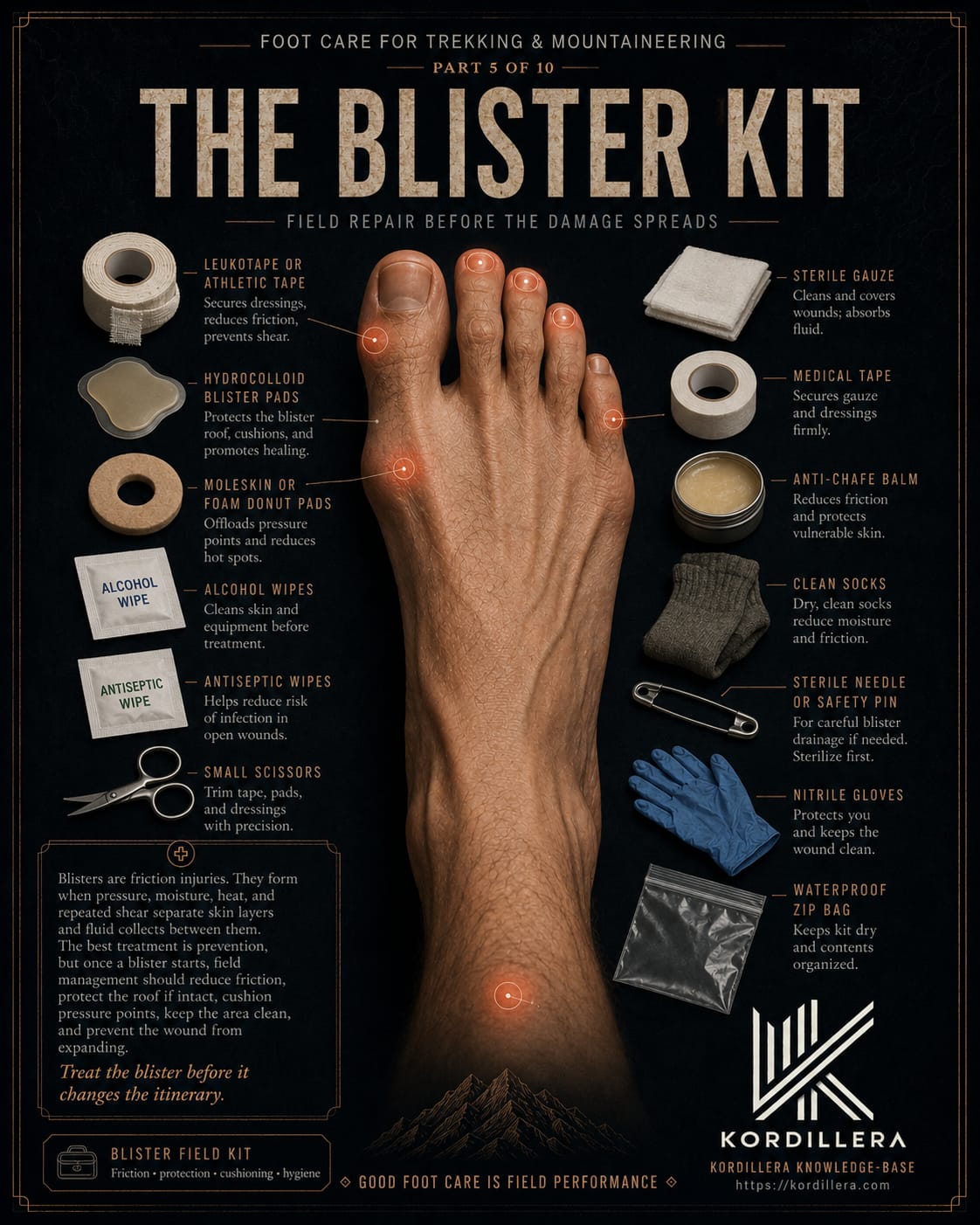
Blisters are friction injuries. They form when pressure, moisture, heat, and repeated shear separate skin layers and fluid collects between them. In trekking and mountaineering, a small blister can change the pace of a day, alter gait, increase pain, and create new pressure problems elsewhere in the foot.
The best treatment is prevention, but once a blister begins, field management should focus on reducing friction, protecting intact skin, cushioning pressure points, keeping the area clean, and preventing the wound from expanding.
A practical blister kit includes strong tape, hydrocolloid blister pads, moleskin or foam donut pads, alcohol wipes, antiseptic wipes, sterile gauze, medical tape, anti-chafe balm, clean socks, small scissors, nitrile gloves, and a waterproof bag to keep the kit dry.
The important lesson is timing. A blister should be managed before it changes how you walk, because once gait changes, the problem can spread to knees, hips, back, and the rest of the expedition.
Treat the blister before it changes the itinerary.
#BlisterKit#BlisterPrevention#FootCare#TrekkingFeet#MountaineeringFeet#FeetFinishExpeditions#HotSpots#Leukotape#BlisterPads#Moleskin#Hydrocolloid#FrictionManagement#PressurePoints#SockChange#BootFit#TrekkingBoots#HikingBoots#ExpeditionHealth#MountainSafety#TrekkingGear#Mountaineering#Trekking#Andes#HighAndes#Ecuador#GuidedTrekking#PrivateExpeditions