Páramo Pack: What to Carry for Ecuador’s High Andes
Part 2 of 10 in the Pack for the Mission Series
The páramo is one of the most unique ecosystems on Earth. Found between the cloud forest and the permanent glaciers of the tropical Andes, it is a landscape of rolling grasslands, wetlands, volcanic slopes, and rugged mountain terrain. Although it sits near the equator, the weather can feel anything but tropical.
A sunny morning can quickly become a cold, windy afternoon, followed by thick fog or rain within minutes. Temperatures fluctuate rapidly, UV radiation is intense due to the high elevation, and saturated soils make trails muddy and slippery. Success in the páramo is less about carrying more equipment and more about carrying the right equipment.
Why Your Pack Matters
Every item in your backpack should serve a purpose. The goal is to stay dry, regulate body temperature, protect yourself from the elements, and remain comfortable throughout the day.
A well-prepared pack allows you to adapt as conditions change instead of reacting after you become cold or wet.
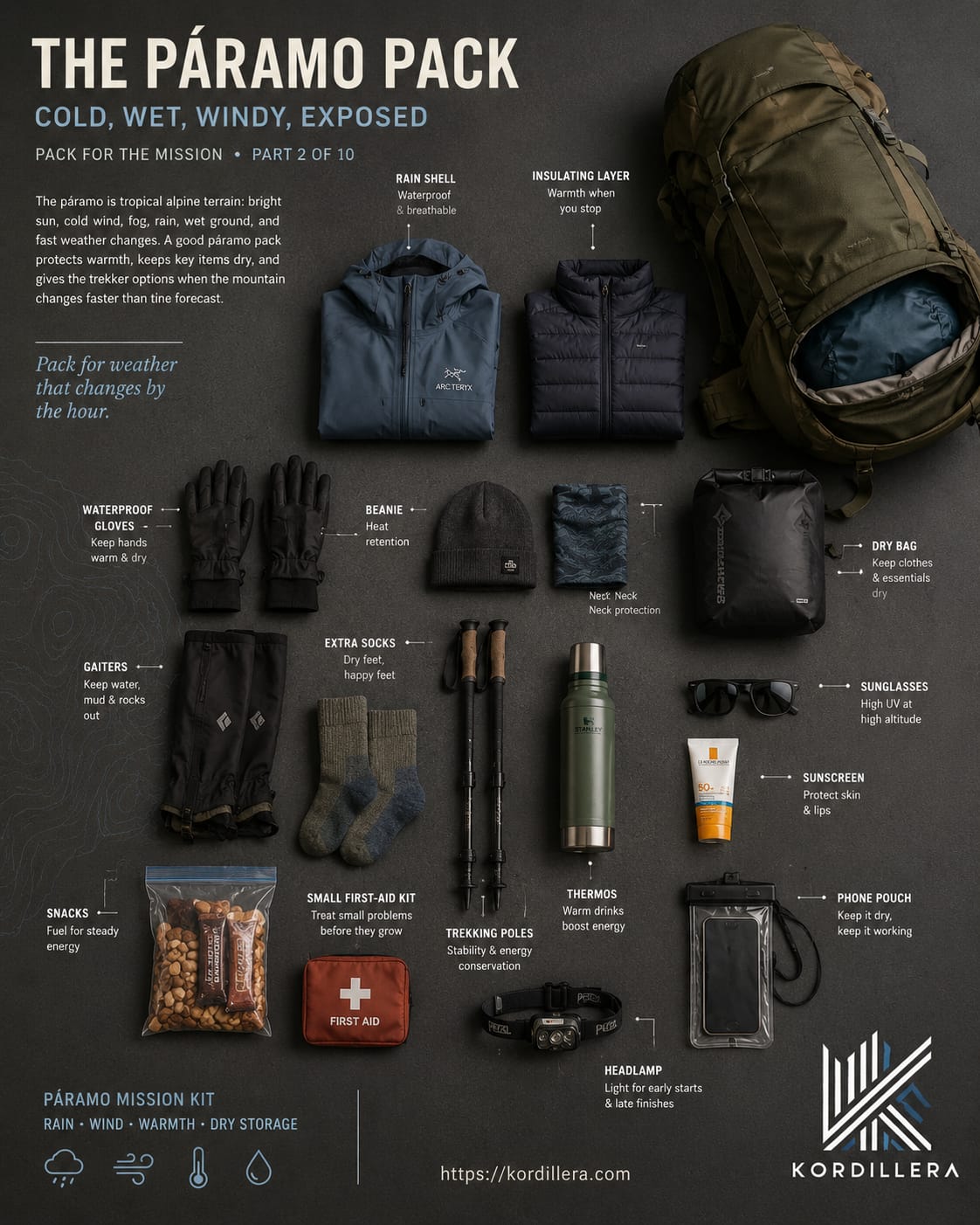
Essential Páramo Packing List
Waterproof Rain Shell
Your outer shell is your first defense against sudden rain, strong wind, and cold mountain air. Choose a breathable waterproof jacket rather than a heavy insulated coat.
Insulating Layer
A lightweight fleece or insulated jacket traps body heat during rest breaks, windy ridges, or early morning starts.
Waterproof Gloves
Cold, wet hands quickly become uncomfortable. Waterproof gloves help maintain dexterity during changing weather.
Beanie and Buff
Much of your body heat escapes through your head and neck. A warm beanie and multifunctional buff provide excellent protection from wind and cold.
Gaiters
Páramo vegetation and muddy trails can soak your boots in minutes. Gaiters help keep mud, water, and debris out of your footwear.
Extra Socks
Dry socks can completely change your comfort level after crossing wet grasslands or streams.
Dry Bag
Protect electronics, spare clothing, passports, and emergency gear by storing them inside waterproof dry bags.
Trekking Poles
Uneven volcanic terrain, steep descents, and muddy trails become much safer with trekking poles. They reduce fatigue while improving balance.
Thermos
Warm tea or coffee is surprisingly effective at helping maintain body temperature during long trekking days.
Sunglasses and Sunscreen
The equatorial sun is extremely strong at high altitude. UV exposure remains high even on cloudy days.
Snacks and Water
Frequent small snacks help maintain energy. Carry sufficient water and consider electrolyte supplements for longer hikes.
Phone Protection
A waterproof pouch protects your phone from rain and condensation while still allowing easy access for photos or navigation.
Headlamp
Even day hikes should include a headlamp in case weather, photography, or slower hiking extends your return.
Small First-Aid Kit
Carry basic supplies for blisters, cuts, headaches, and minor emergencies. Prevention is often the best treatment in remote environments.
Pack Smart, Not Heavy
One of the most common mistakes new trekkers make is overpacking. Extra weight quickly becomes noticeable above 3,500 meters (11,500 feet), where oxygen levels decrease and every climb demands more energy.
Instead of carrying unnecessary equipment, focus on versatile clothing layers and practical safety essentials. Every item should have a clear purpose.
The Mountain Is Always Changing
The same trail may begin under bright sunshine, disappear into dense fog, receive afternoon rain, and finish beneath a clear evening sky. These rapid transitions define the tropical Andes.
Experienced mountain guides prepare for every condition before leaving the trailhead—not after the weather changes.
A disciplined packing system gives you options, keeps you comfortable, and allows you to enjoy the extraordinary beauty of Ecuador’s high-altitude landscapes with confidence.
The objective isn’t to carry more. The objective is to carry correctly.
Pack for the Mission Series
This article is Part 2 of 10 in Kordillera’s Pack for the Mission series, where we explore the essential gear, skills, and preparation needed for safe trekking and mountaineering in the Andes.
Stay tuned for the next installment as we continue building the ultimate mountain packing system for tropical alpine adventures.